
Nuclear Power Generation
Story 5
All about nuclear generating stations
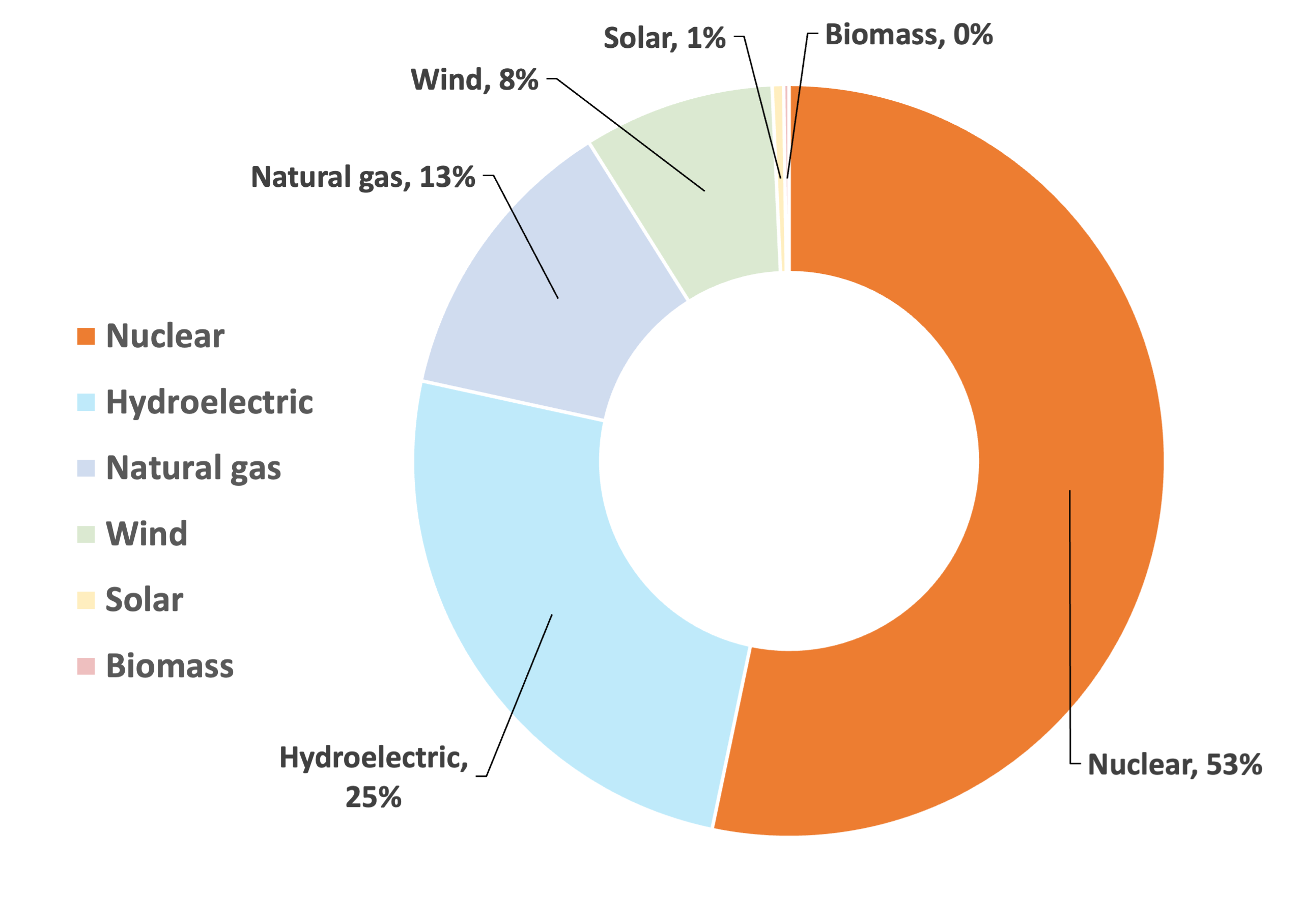
In this story you’ll learn more about nuclear power generation, a type of generation critical to Ontario’s energy mix. Right now, nuclear stations produce approximately half of all of Ontario’s electricity, and they will continue to have a big role to play in the future. There’s no path to net-zero without nuclear power.
2023 Energy Output
Nuclear generating stations in Ontario
There are three (3) nuclear generating stations in Ontario. OPG owns and operates the Darlington and Pickering Nuclear Generating Stations (NGS). OPG owns a third station, which is operated by Bruce Power.
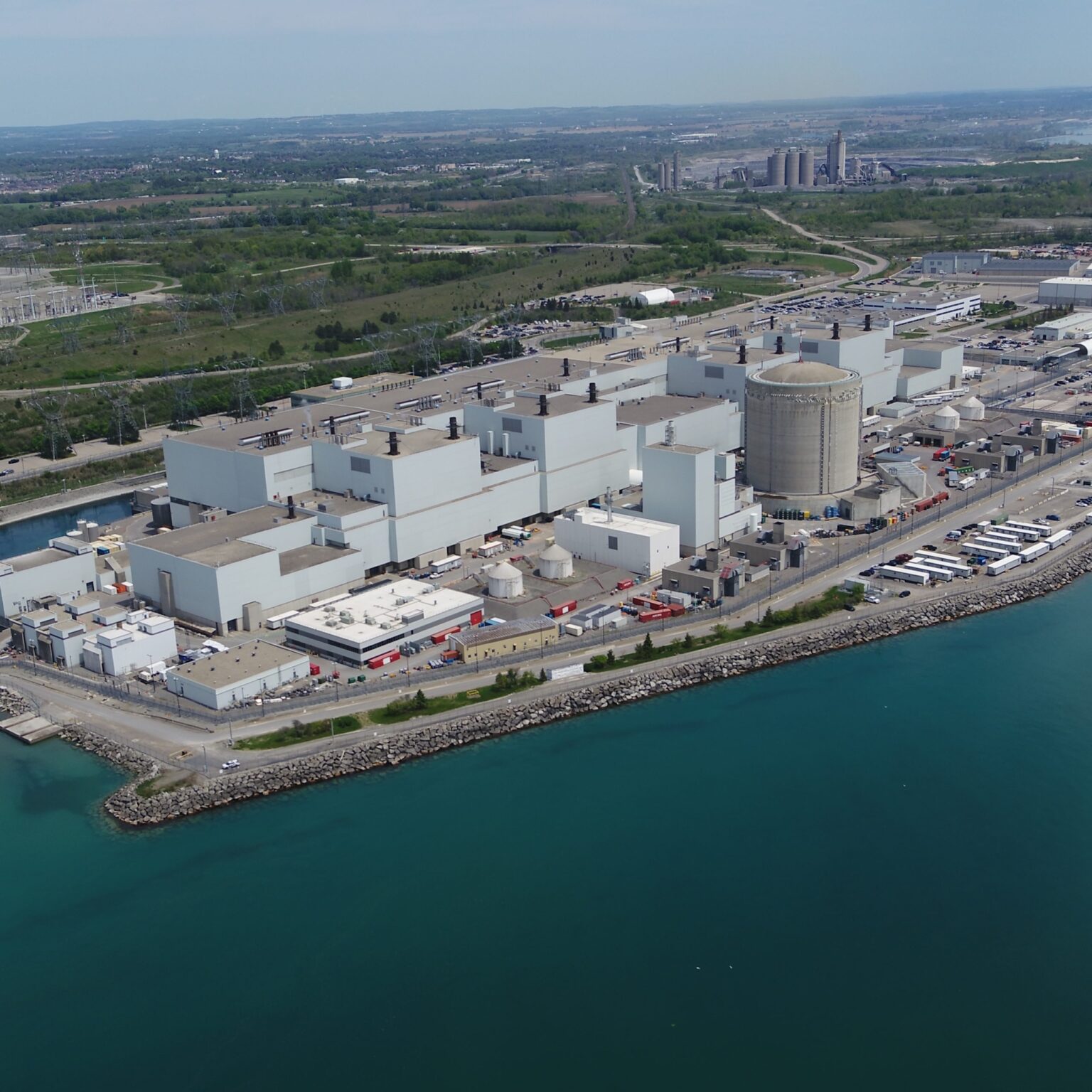
Darlington
- Number of reactors in operation: 4
- Commissioning (start-up): 4 in early 1990's
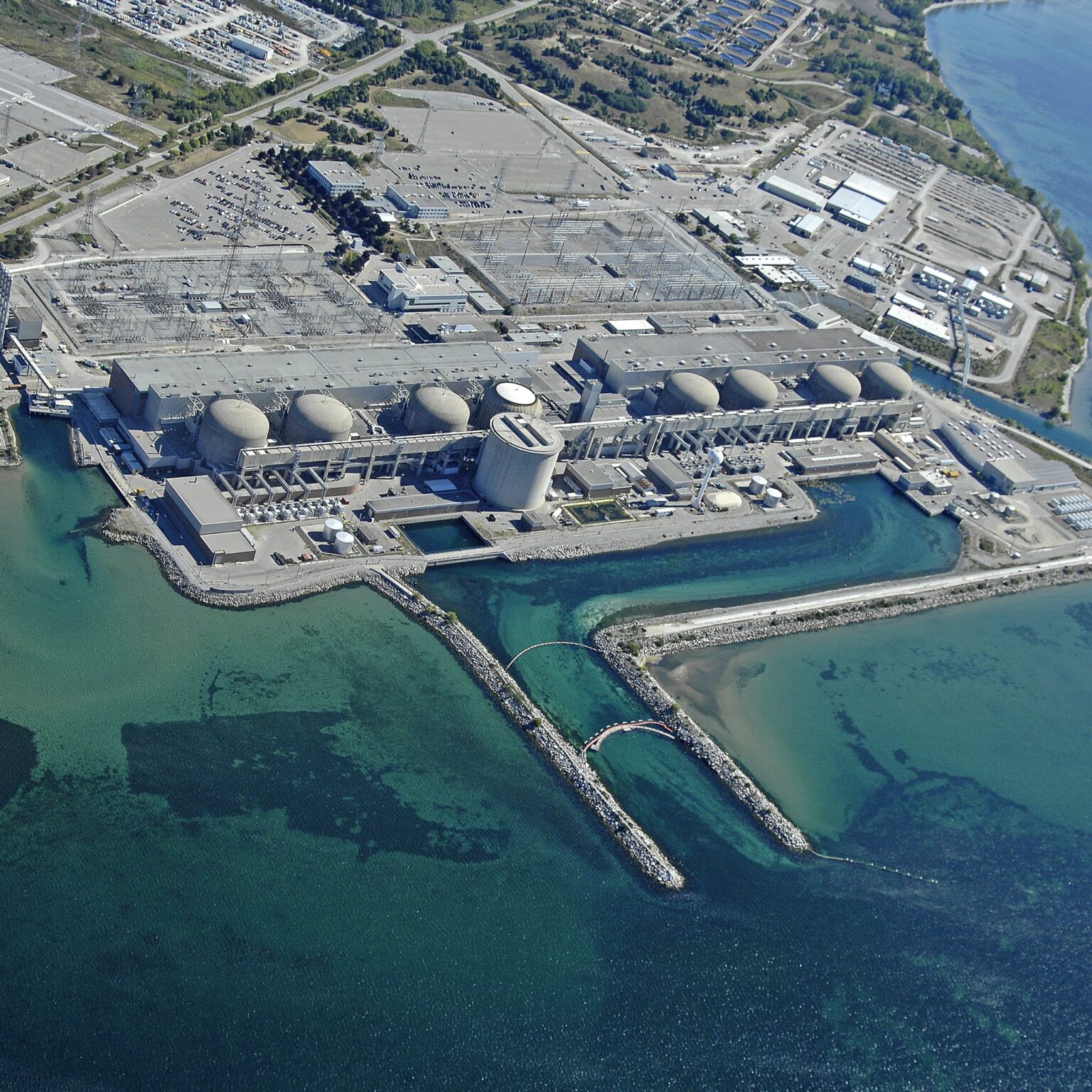
Pickering
- Number of reactors in operation: 6
- Commissioning (start-up): 4 in early 1990's, 4 in mid 1980's
(units 2 and 3 are in a permanent safe shutdown state)
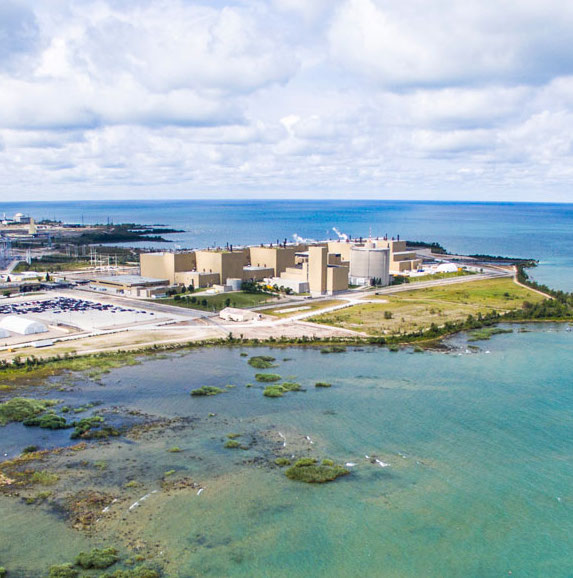
Bruce
- Number of reactors in operation: 8
- Commissioning (start-up): 4 in early 1970's, 4 in mid-late 1980's
Nuclear reactors and how they produce electricity
The majority of Ontario’s electricity needs are met by nuclear and hydroelectric generating stations, as detailed in Story 3 - Electricity in Ontario.
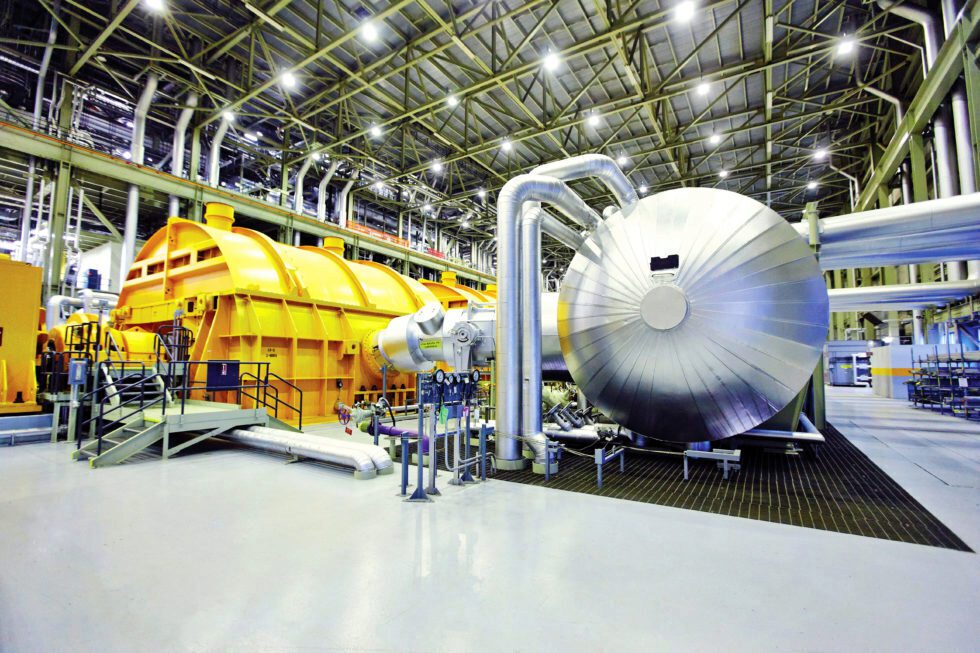
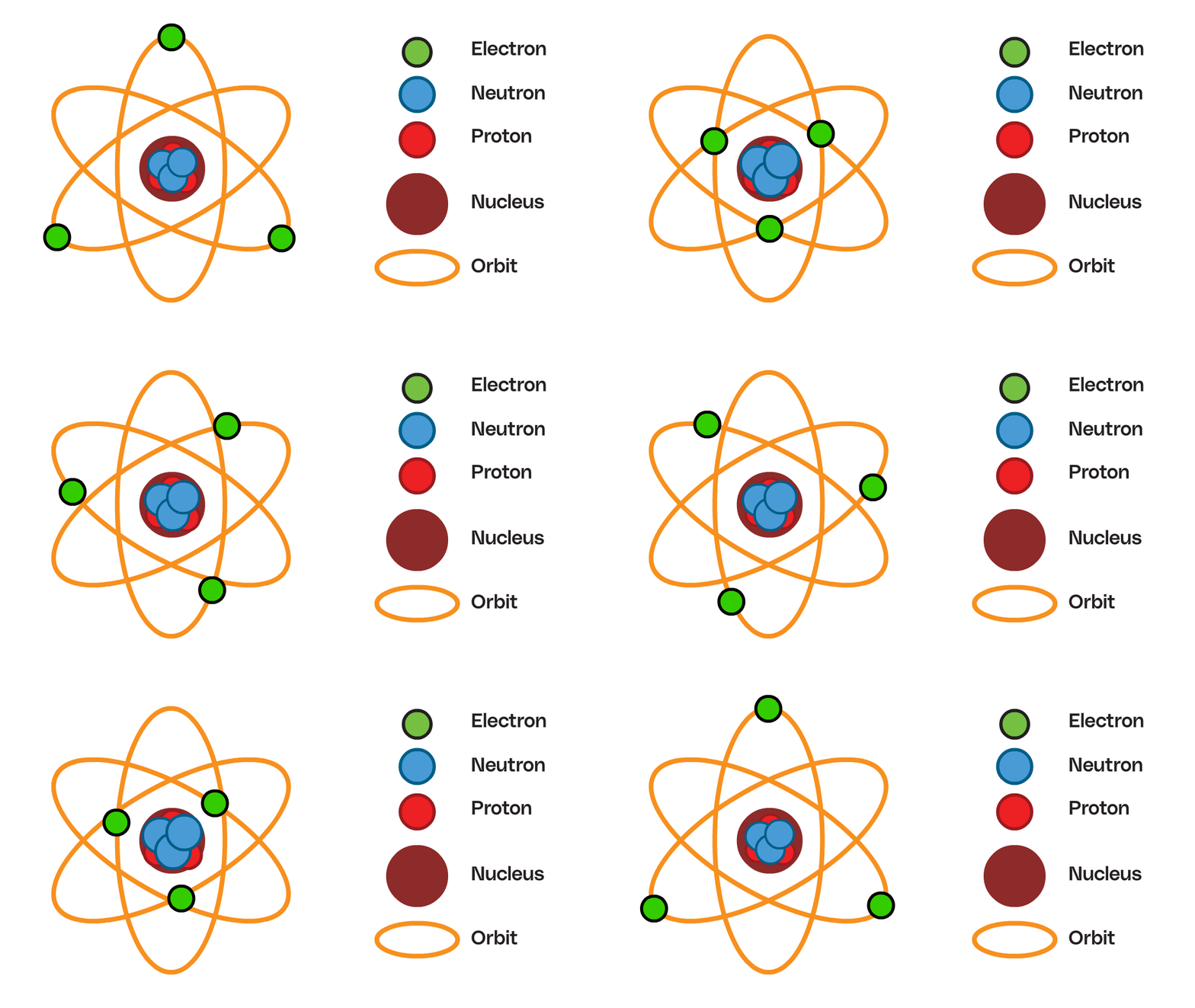
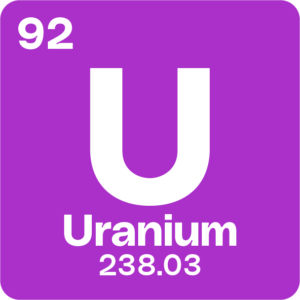
While the various conventional generation sources look different, they have a major thing in common, a rotating turbine connected to an electrical generator. The source of energy that spins the turbines in a hydroelectric station is moving water, whereas wind is the source that spins turbines used for wind generation. In thermal generators like coal, oil, or natural gas, heat from combustion is used to boil water and produce steam that spins a turbine. Canadian nuclear reactors use natural uranium for fuel, but the uranium is not burned, Uranium atoms are split to generate heat – the technical term for this splitting is fissioning.
Common nuclear terms

To learn more check out OPG’s Climate Challengers

CANDU® reactors
While there are many types of reactors, Ontario’s nuclear generating stations use a Canadian technology called CANDU®. CANDU® reactors are developed in CANada. They use heavy water, known as Deuterium (doo-tee-ree-uhm) as a moderator and coolant, and use Uranium as a fuel. That is how CANDU® got its name!
CANDU® reactors have been safely operating in Ontario for more than 50 years. This type of reactor is characterized by:

- The use of heavy water (deuterium) to help control the fission reaction. Heavy water is naturally occurring in 1 out of every 7,000 drops of ordinary water and unlike hydrogen in plain water, it contains an extra neutron, making it 10 per cent heavier. Heavy water acts as a moderator, slowing down the fission process within the reactor and as a coolant, transporting the heat generated by the fission process to boil the ordinary water to make the steam needed to turn the turbines.
- The use of natural uranium as a fuel, instead of enriched uranium.
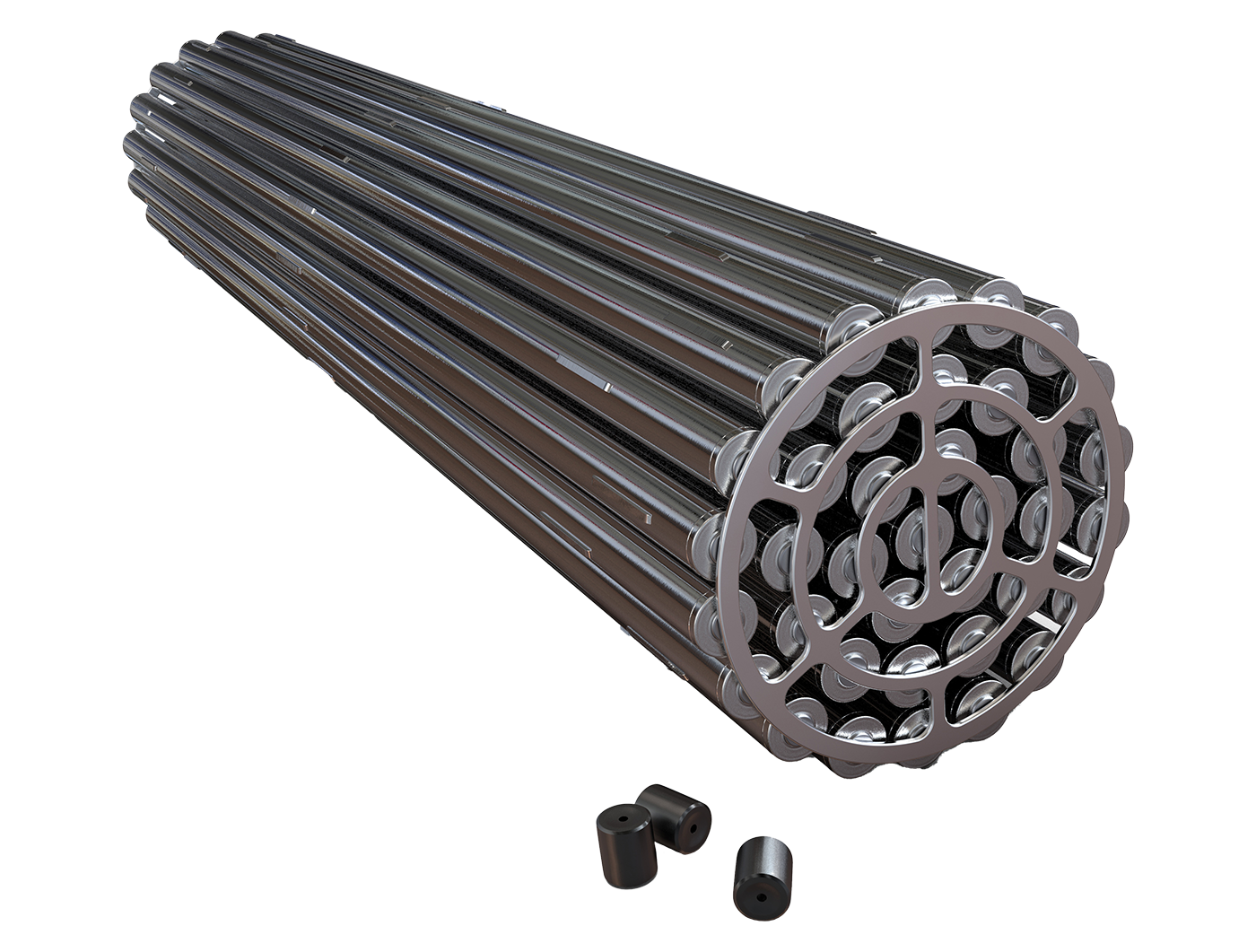
- A design that uses pressure tubes instead of pressure vessels to hold fuel bundles. This is unique to the CANDU® design and means that the reactor does not need to be shut down for refueling.
- Two physically independent safety shutdown systems to stop the fission reaction, if required. OPG has many additional safety and security measures in place which you will learn more about in Story 6, and can access on our website.
Take a peek inside a CANDU® reactor
The Canadian Nuclear Safety Commission (CNSC) regulates nuclear power plants in Canada. Find out more here.
Did you know?
The first step in converting uranium ore into fuel for CANDU® reactors is mining. OPG sources uranium from various mines around the world, but primarily from active Canadian mines in Saskatchewan owned by Cameco Corporation.
You can learn more about Cameco’s Uranium Operations here
Find out more about these mines and Indigenous participation here
From uranium ore to CANDU® reactors
-
Jun 5, 2024
-
Jun 5, 2024
-
Jun 5, 2024
-
Jun 5, 2024
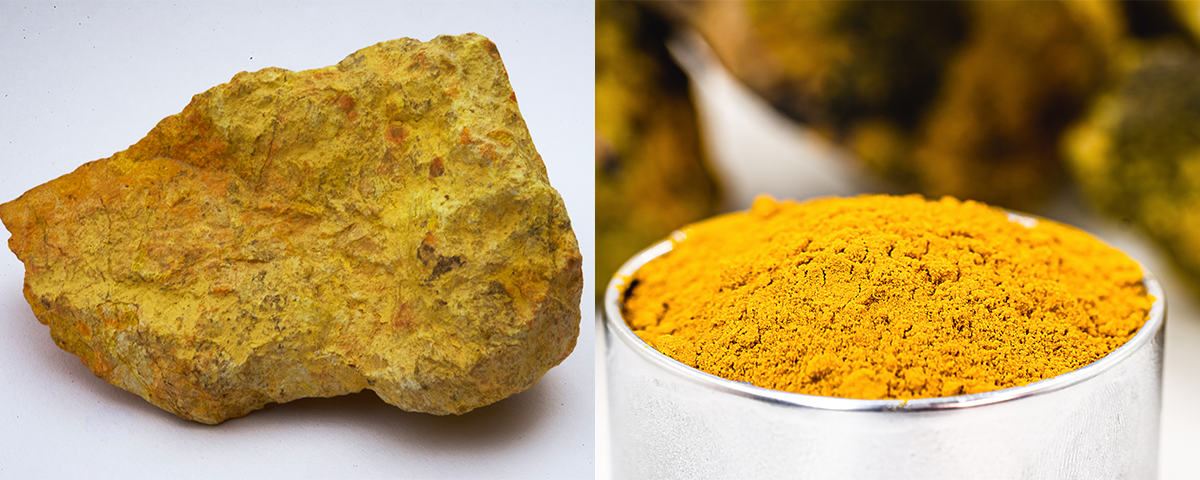

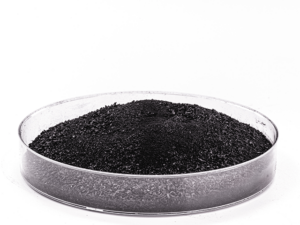
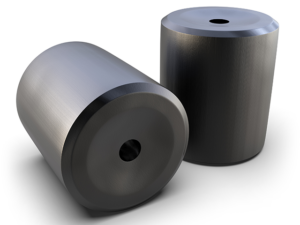
The CNSC regulates the complete fuel cycle for nuclear safety and security and protecting the environment,
and it ensures all international laws are followed.
Do you really burn uranium?
Sometimes you’ll hear someone say that reactors burn uranium as the fuel. You don’t burn uranium like you would natural gas. You use it until its depleted which means it doesn’t help with fission as much as it should. It’s kind of like a battery that’s losing its charge.

uranium trioxide
(yr-ay-nee-uhm trai-aak-side)
uranium dioxide
(yr-ay-nee-uhm dai-aak-side)
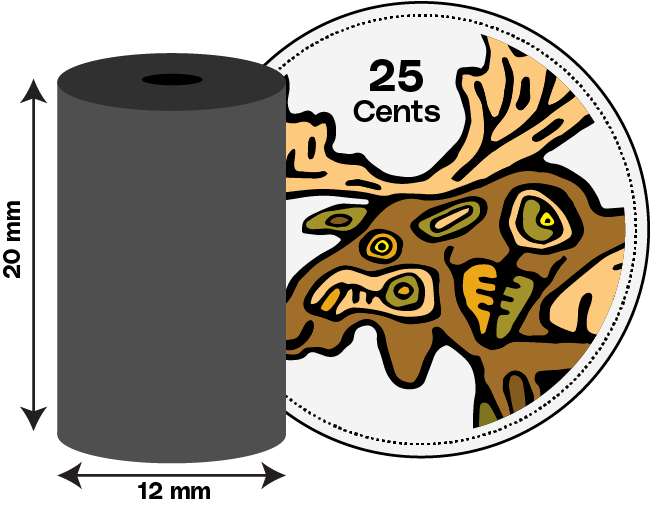
There is a lot of energy stored in the tiny fuel (uranium) pellets. So much energy that eight pellets can power a single home for an entire year. You found out that we at OPG have 10 operating CANDU® reactors right now. And each reactor contains approximately five million pellets, so for 10 reactors that’s more than 50 million pellets. Or enough to power about six million homes for a year.
What is radiation?
One of the first things that comes to mind when people think about nuclear power is radiation. But what is it? Simply put, radiation is the energy emitted by an object in the form of electromagnetic waves or particles, and it’s all around us.
In fact, it is naturally occurring in some of the foods we eat, the sun, and even the rocks and earth we live on. It is used in medical treatments and imaging, found in the electronic devices we use, and also an important part of the nuclear generation process.
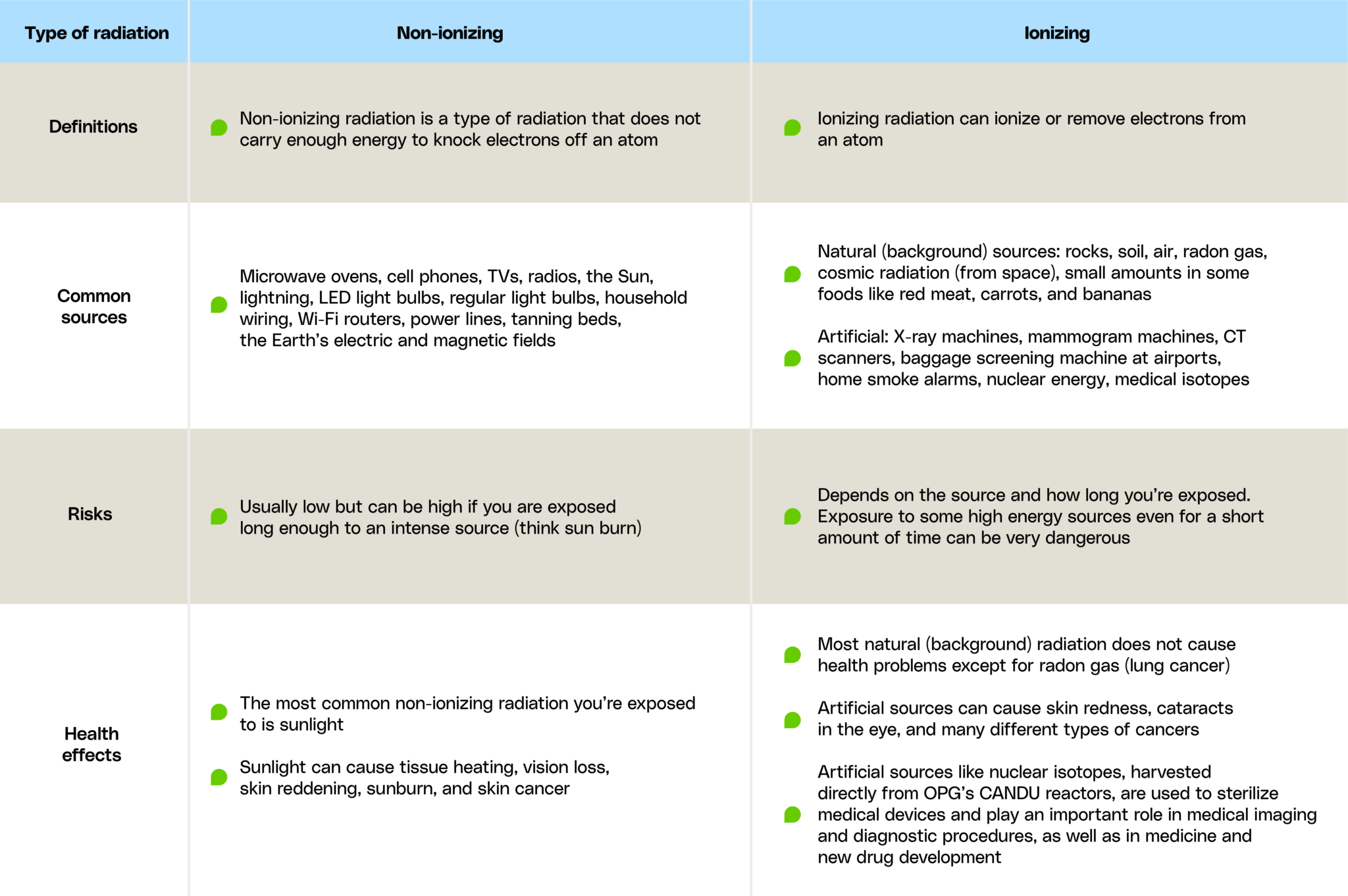
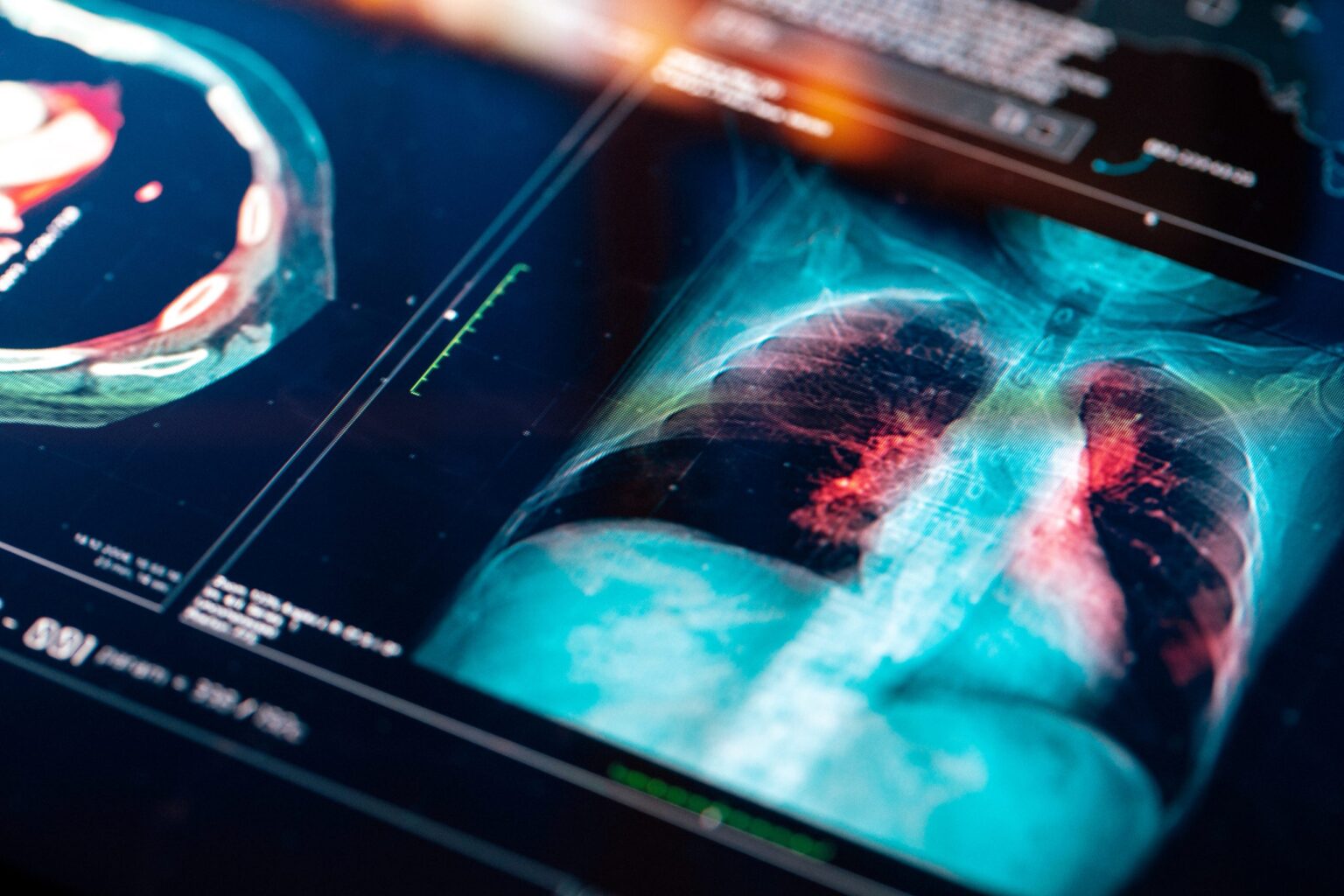
Learn more about radiation from the…
Canadian Nuclear Safety Commission (Government of Canada)
millisievert
(mil-e-see-vert)
radiation
(ray-dee-ay-shun)
ionizing
(ai-uh-nai-zuhng)
Measuring exposure to radiation
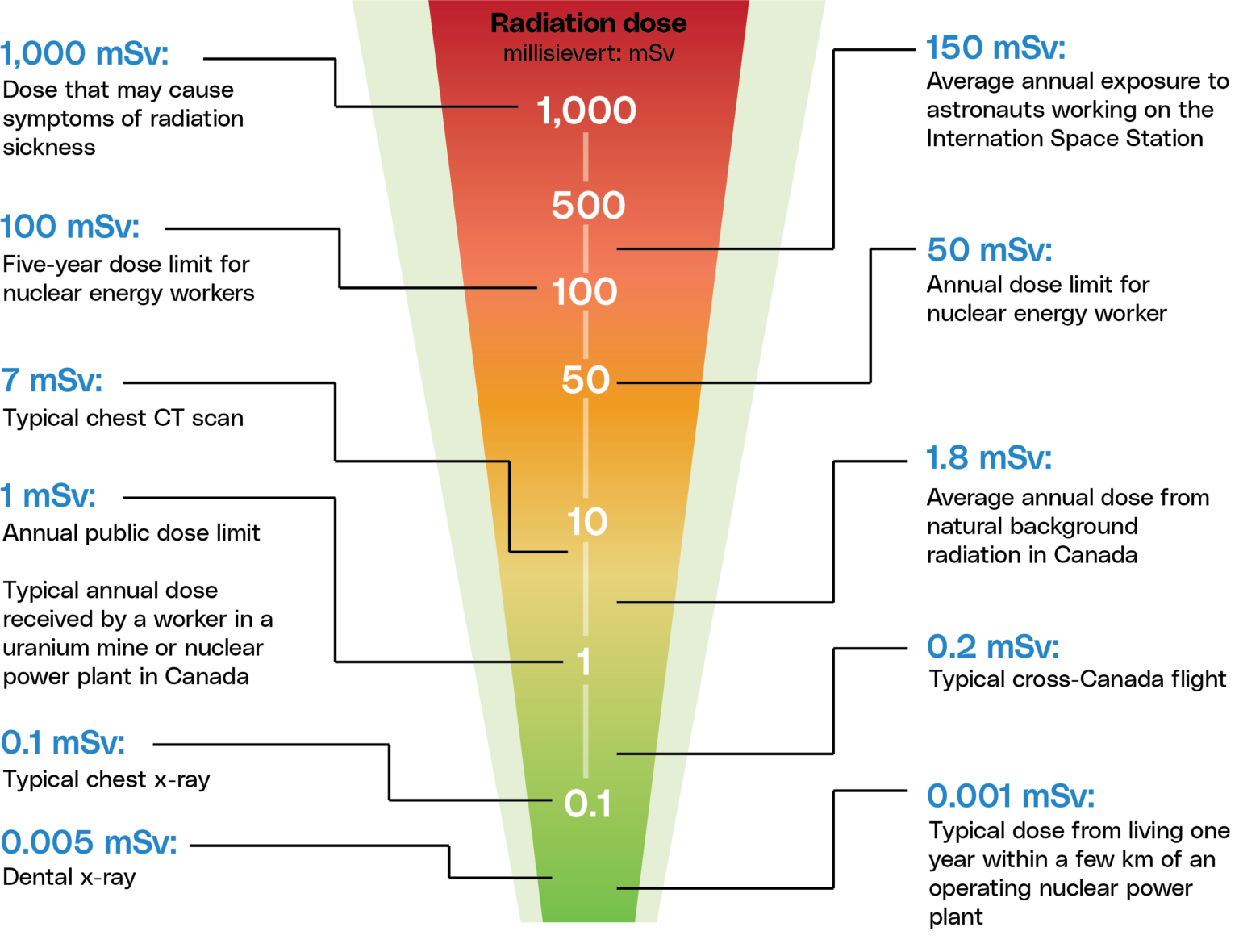
Radiation has always been present and is all around us. The amount of energy absorbed from radiation exposure is referred to as a dose.
The unit millisievert (mSv) tells you about your radiation dose. On average, a person in Ontario receives a dose of about 1.8 mSv per year. Most of the radiation comes from foods, the ground, the sun, x-rays, and flights.
Living within a few km of a nuclear station adds only about 0.001 mSv to someone’s total exposure for the year. So that’s going from 1.8 mSv to 1.801 mSv. You would get 20 times more radiation just by flying across the country one time (0.02 mSv). So, you can see that living near a nuclear station doesn’t increase your exposure to radiation by very much at all.
Find out more about nuclear energy and radiation from the Canadian Nuclear Association
Radiation dose examples
Background radiation
Background radiation is made up of natural and artificial (human-made) sources. Natural background radiation worldwide is on average 2.4 mSv/year, though local variations can be significant.
In some places, such as Ramsar in Iran, natural radiation levels can reach 260 mSv/ year—over five times the dose limit for Canadian nuclear energy workers.
Canadians, on average, are naturally exposed to about 1.8 mSv/year. Local levels vary from about 1.8 mSv in Ottawa to about 4.1 mSv in Winnipeg. Most of this radiation comes from rocks in the ground and from naturally occurring radon gas. Radiation from nuclear power produces less than 0.1% of our background radiation.
Source: Page 82 – Canadian Nuclear Association Factbook 2023 (CNA-Factbook-2023-English.pdf)

Environmental risk assessments
With oversight from the CNSC, we ensure the safety of people, our employees, and the environment – safety is our overriding priority. And that includes the air, water, and land. CNSC’s reports show that we’re doing well at protecting the environment both on and off our sites. This includes risks from radiation and other types of harm.
What the future looks like for nuclear power
Reaching net-zero means innovating and investigating new technologies (i.e. SMRs & MMRs) to explore the ways nuclear power can help meet future demand. We at OPG are working on extending the life of our existing reactors, and exploring new types of reactors that will help meet Ontario’s future electricity demands and help us reach net-zero as part of our Climate Action Plan.
Small Modular Reactors (SMRs)
- Smaller in production capacity
- Smaller footprint than existing reactors
- Have major components that are assembled in factories, reducing costs
- Can be built faster than large reactors
- Can be connected to the grid or operated off-grid in remote locations
- Can produce extra heat that industries may need
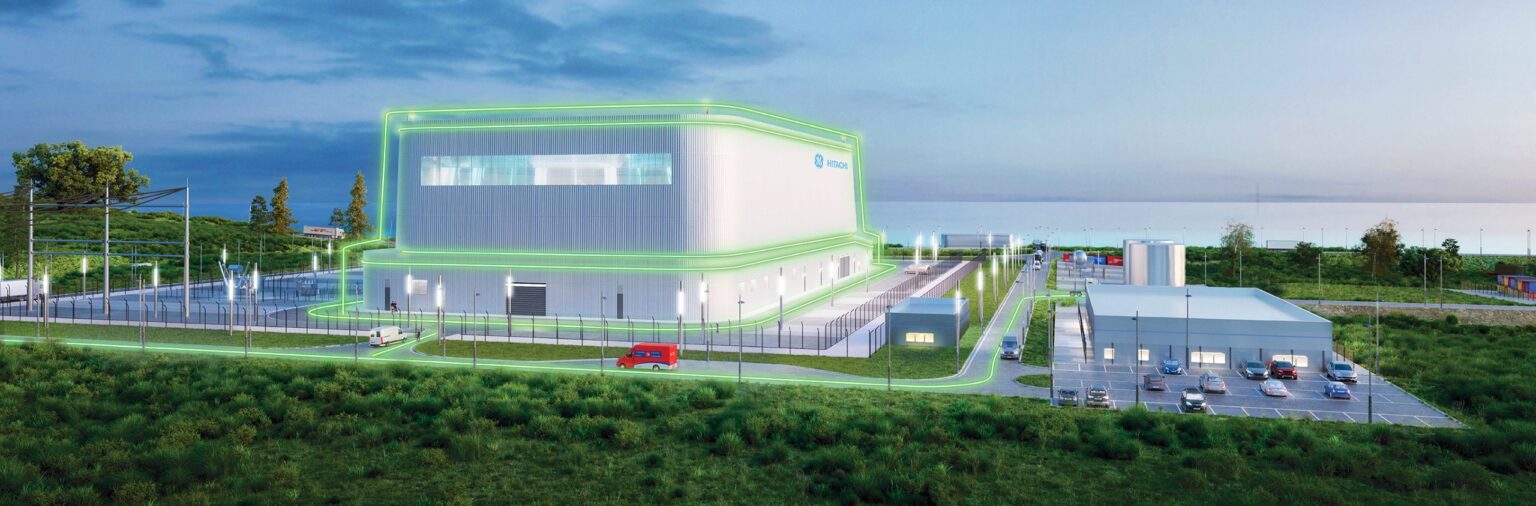
Learn more about the GE Hitachi BWRX-300, a Small Modular Reactor
Micro Modular Reactors® (MMRs)
- Smaller in production capacity (1 MW to 300 MW)
- Smaller footprint than SMRs
- Can be connected to the grid or operated off-grid in remote locations
- Can be linked together to meet demands at a site
- Can produce extra heat that industries may need
Find out more about micro modular reactors
Find out more about new nuclear technologies
Last words on nuclear power
To reach net-zero, we need to use all available sources of electricity generation in the energy mix. Wind and solar are good but we know they rely on the weather and a large land mass to contribute to the energy mix. Hydroelectric is important and provides a reliable steady flow of electricity. Also, natural gas and biomass are quick responding to meet peak needs.
Nuclear power provides a foundation of baseload electricity to the grid. Ontario’s existing nuclear stations, and new reactor technologies, will make sure everyone has the electricity they need while reducing overall emissions. Now and in the future.





So what did you learn?